











From Passive Assistance to Active Assistance
Traditional e-bikes mainly work through a simple process: the rider senses the road, makes a decision and the bike follows.
ADO Sense® 3.0 introduces an Active Assist approach. The system combines rider information with information from the bike and its surroundings, then uses AI-assisted decision logic to determine how the bike should respond.
This means the system can consider:
- Rider input: pedalling force, riding habits and riding intention
- Road conditions: changes in gradient and terrain
- Vehicle status: information about how the e-bike is currently operating
- Potential risks: information detected around the bike
The idea is not simply to provide more motor power. It is to provide assistance that is better matched to the situation.
One Bike, More Ways to Sense the Road
A key part of SENSE 3.0 is the combination of rider input and vehicle-based sensing.
On compatible ADO models, the system combines a front LiDAR with rear millimetre-wave radar. For riders researching e bike radar technology, this combination is important because the two sensing technologies serve different purposes within the riding system.
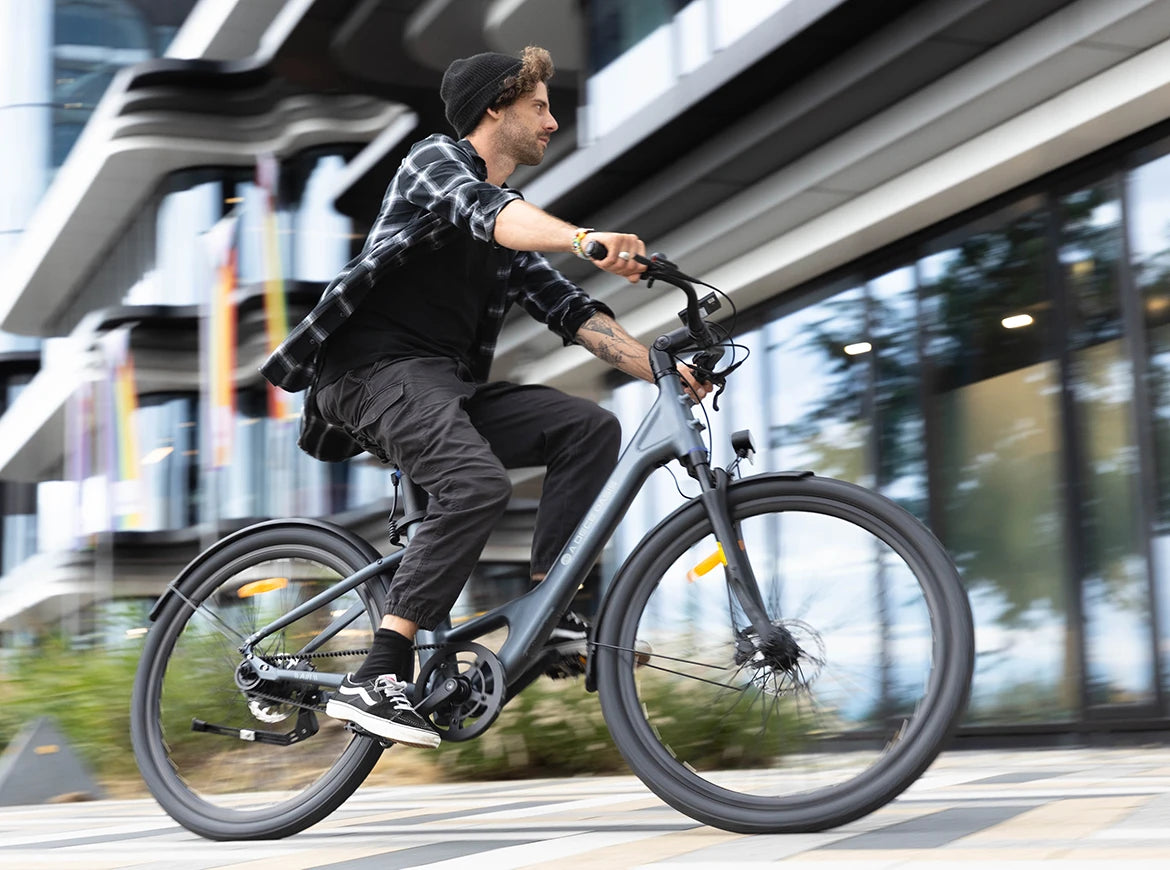
Daily riding rarely takes place on one type of road. A commute can move from a flat street to a climb, through a corner and back onto level ground.
SENSE 3.0 is designed to respond to these changes. Its intelligent riding functions include slope detection, gear adjustment, cornering assistance and sustained assistance for longer climbs. For the rider, the benefit is straightforward: fewer adjustments and a more consistent riding experience.

More Awareness in Everyday Traffic
Riding in towns and cities means constantly sharing space with other road users.
SENSE 3.0 includes front sensing functions such as Front Collision Warning (FCW) and Front Cross Traffic Alarm (FCTA). The system can provide different warning levels according to detected collision conditions.
The rear millimetre-wave radar supports Blind Spot Detection (BSD) and Lane Change Assistance (LCA), providing additional information about relevant moving traffic around the rear of the bike.
A bike radar system does not replace the rider's attention. It adds another source of information to help riders remain aware of what is happening around them.
Why Does This Matter to Riders?
The value of smart technology is ultimately measured by the riding experience.
ADO Sense® 3.0 brings sensing, intelligent decision-making and assistance together to reduce unnecessary manual adjustments during a ride.
For the rider, that means:
- Less Effort: assistance can be matched more intelligently to riding conditions
- Less Thinking: automatic assistance and shifting can reduce constant manual adjustments
- More Confidence: additional sensing and warnings provide greater awareness of the riding environment
Conclusion
ADO Sense® 3.0 represents a different approach to electric assistance. Instead of focusing only on motor output, it combines rider input, environmental sensing and intelligent decision-making to create a more responsive riding system.
From hills and gear changes to surrounding traffic, the technology is designed to help the bike better adapt to the way you ride.
Less Effort. Less Thinking. More Confidence.


Leave a comment
Please note, comments need to be approved before they are published.