











For many UK commuters, the daily journey to work is one of the biggest recurring transport costs.
A car offers flexibility, public transport avoids the need to drive, and an e-bike can provide a different balance between cost, travel time and independence.
So, which option actually saves more money?
The answer depends on your distance, route, parking situation and how often you travel. But for short and medium-distance urban journeys, an e-bike can have a strong advantage in day-to-day running costs.
Comparing the Everyday Cost of Commuting
The cost of commuting goes beyond the price of a ticket or a tank of fuel.
Car commuting
Regular car users need to consider:
- Fuel
- Insurance
- Road tax where applicable
- Servicing and repairs
- Tyres and other wear items
- Parking
- Possible congestion or clean-air charges
For short journeys, these costs can be significant compared with the distance travelled.
Public transport
Trains and buses can be more economical than driving, especially when parking is expensive.
However, commuters may still need to pay for:
- Daily or weekly fares
- Season tickets
- Connections between different services
- First- and last-mile transport
UK rail fares have continued to change in recent years. For example, the Office of Rail and Road reported a 5.1% increase in average Great Britain rail fares in 2025, while regulated fares increased by 4.5%.
E-bike
An e-bike has a different cost structure.
You mainly need to consider:
- Purchase price
- Electricity for charging
- Routine maintenance
- Occasional replacement parts
Energy Saving Trust estimates that charging an e-bike for a 10-mile journey can cost as little as around 4p at home, depending on the bike and electricity tariff.
This makes an e-bike particularly interesting for commuters who regularly travel relatively short distances.
E-Bike vs Car vs Public Transport
Cost is important, but it is not the only factor.
| Factor | E-Bike | Car | Public Transport |
|---|---|---|---|
| Daily running cost | Low | Usually higher | Depends on route and fares |
| Fuel/energy | Electricity | Petrol, diesel or charging | Included in ticket price |
| Parking | Usually minimal | Can be expensive | Not required |
| Traffic | Can use cycle routes | Affected by congestion | Can be affected by delays |
| Flexibility | High for short and medium trips | Very high | Depends on timetable |
| Maintenance | Relatively low | Higher | Included in ticket/fare |
| Storage | Needs secure bike storage | Requires parking | No vehicle storage needed |
| Exercise | Built into the journey | Limited | Walking may be involved |
For commuters comparing electric bike uk options with other forms of transport, the biggest difference is often the combination of low running costs and flexibility.
Travel Time and Flexibility Matter Too
The cheapest option is not always the most convenient.
By car
Cars offer door-to-door travel, but city traffic can make journey times unpredictable.
Parking can also add another 10–20 minutes to a commute, depending on the destination.
By public transport
Public transport can work well for longer journeys.
However, the journey depends on:
- Timetables
- Connections
- Delays
- Station locations
A short walk or bus ride may also be needed at either end.
By e-bike
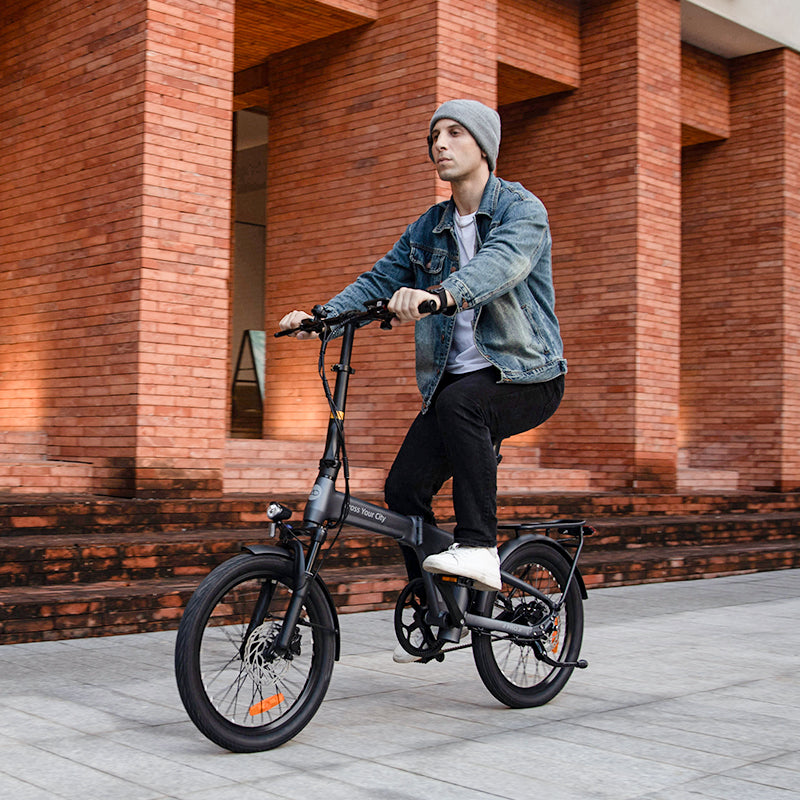
For shorter urban journeys, an e-bike can offer more control over the route.
You can:
- Leave when you want
- Choose alternative cycling routes
- Avoid some traffic congestion
- Travel directly between neighbourhoods
- Combine cycling with public transport when appropriate
This is one reason commuting with electric bike can be attractive for people who want more control over their daily journey.
Long-Term Value: What Are You Actually Paying For?
Looking only at the purchase price can be misleading.
A car may have a relatively high ongoing ownership cost. Public transport has no vehicle maintenance cost, but frequent commuters can accumulate substantial fares over time.
An e-bike requires an upfront investment, followed by relatively low running costs.
Energy Saving Trust notes that e-bikes generally have low running costs compared with cars, while also avoiding costs such as road tax and conventional vehicle fuel.
For example, a commuter travelling 10 miles per day could potentially spend only a small amount on electricity compared with the fuel cost of driving the same distance.
Of course, an e-bike still needs:
- Tyre maintenance
- Brake checks
- Chain or belt maintenance
- Battery care
- Occasional servicing
So it is better to think of an e-bike as a lower-cost transport option rather than a completely cost-free one.
Where the ADO Air 20S Fits In
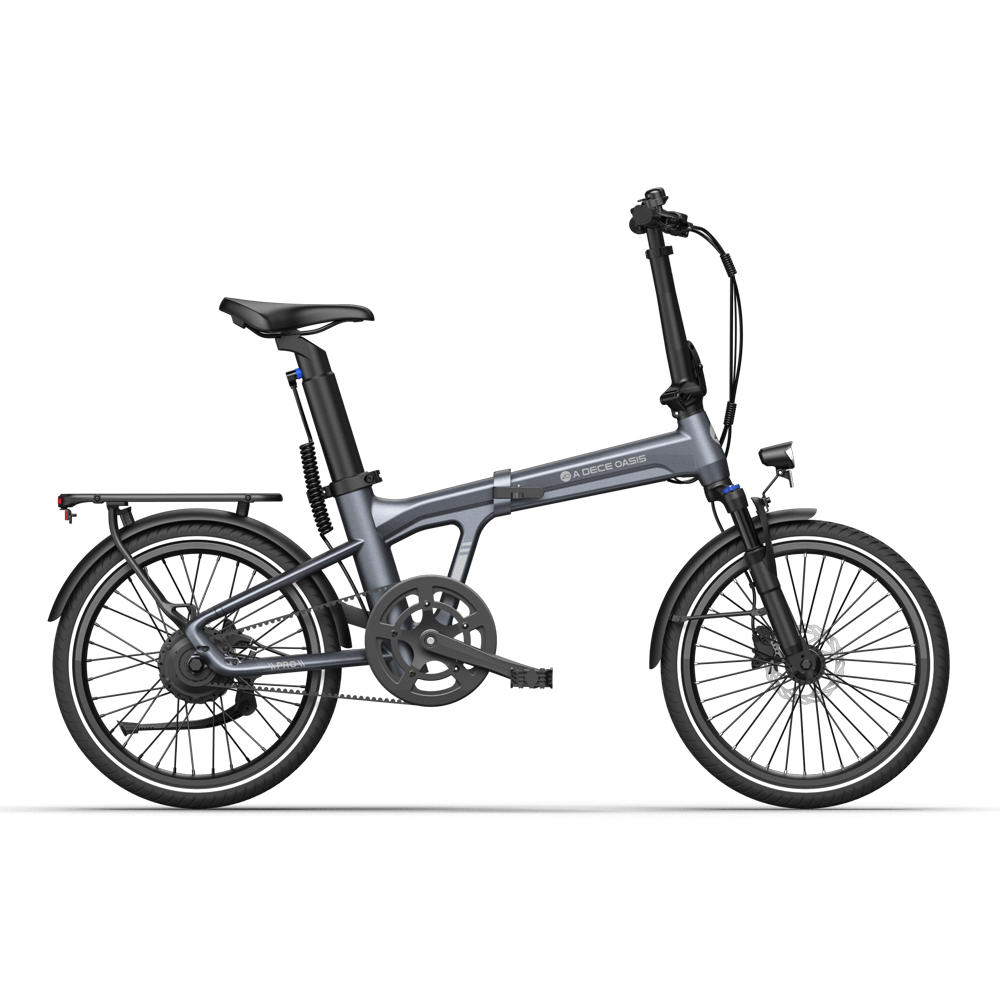
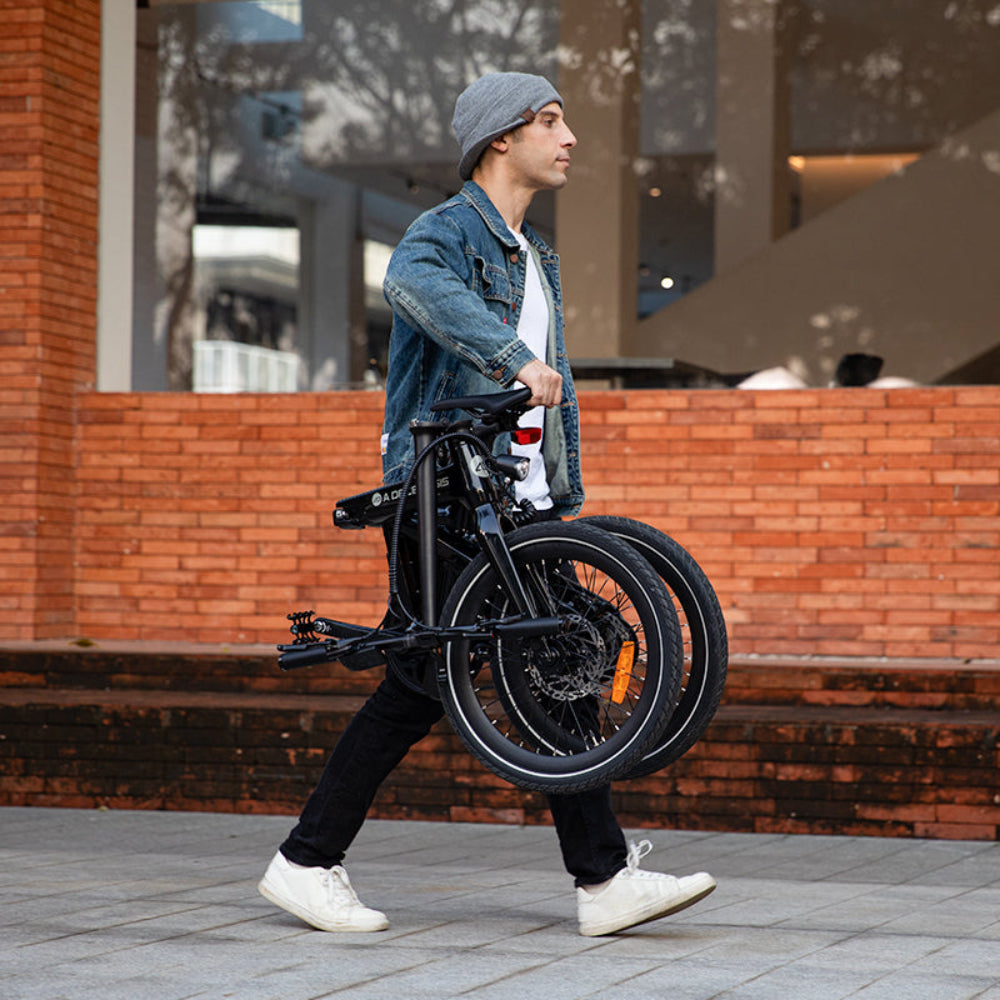
The ADO Air 20S is a folding e-bike designed around compact urban use.
Its folding format can be useful for commuters who:
- Have limited storage space
- Live in an apartment
- Need to carry the bike indoors
- Combine cycling with other transport
- Prefer a smaller bike for city journeys
This type of bike can be particularly useful when the commute is too long to walk but does not justify the full cost and inconvenience of driving.
The key point is not that an e-bike replaces every car or train journey.
For many people, it works best as an alternative for short and medium-distance trips, where parking, traffic and daily transport costs are more noticeable.
Conclusion: Which Option Saves More?
There is no single answer for every UK commuter.
An e-bike may make the most financial sense when:
- Your commute is relatively short
- Parking is expensive
- You travel most days
- You have secure bike storage
- You want low day-to-day running costs
A car may be better when:
- You regularly carry passengers or large loads
- Your journey is difficult to complete by bike
- Public transport is limited
- You need door-to-door flexibility
Public transport may be better when:
- You travel long distances
- You live close to a reliable rail or bus service
- You do not want to own or maintain a vehicle
For urban commuters, an e-bike can sit somewhere between the two. It offers more independence than public transport, while generally costing much less to run than a car.


Leave a comment
Please note, comments need to be approved before they are published.